Sailing Fitness - The Fundamentals
Book Extract
Most sailors try to stay active during the week – a run here, a gym session there – so their legs and arms don’t let their brains down when it blows 20 knots on the weekend. But if you’re honest, how many of those workouts are really designed to help you sail faster?
In a typical windy race, half to two-thirds of your time is spent just trying to keep the boat or board at the right heel angle and the sails working efficiently – hiking, trapezing or pumping. All of it demands strength and endurance through your thighs, hips, core, lower back and arms. The fitter and more conditioned these areas are, the longer you can hold good form – and the less discomfort you’ll feel.
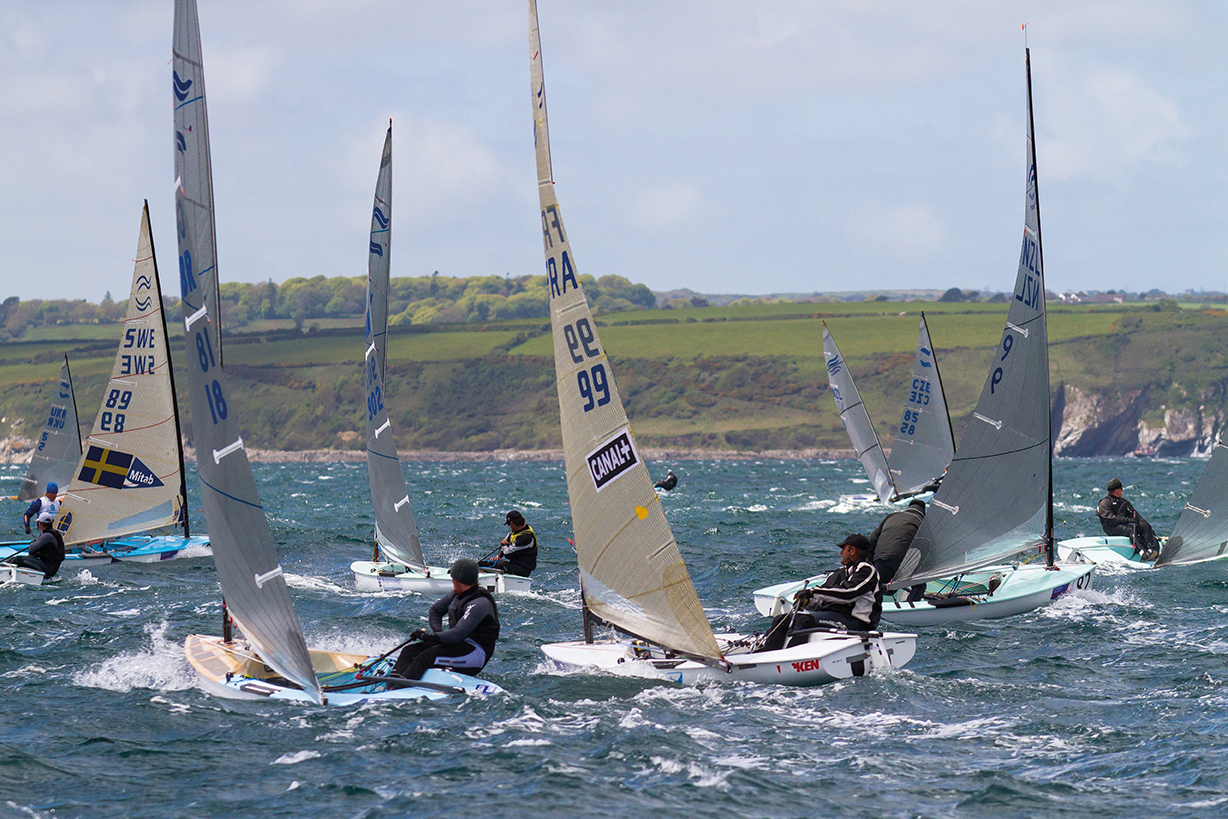
The fitter you are, the longer you can hold good form
Running, swimming or general gym work are great for overall health and fitness, but they don’t fully prepare your body for what sailing throws at it. The positions and loads are so specific that, without building up the right muscles – or the right endurance in them, you can easily end up sore or even injured once the wind comes on.
Getting fitter won’t magically make sailing easy – strong winds will always test you – but it will mean you can push harder for longer, make better decisions under pressure and spend more time near the front of the fleet instead of just hanging on.
Spin classes can be good training for cycling, running is good training for running and swimming prepares you for swimming – but to get truly fit for sailing, we need to sail. There’s no better training for the demands of the sport than time on the water.
That said, most of us can’t sail often enough to build the fitness we need for racing. So, it makes sense to supplement sailing with exercises that target the same muscles and movement patterns. The key is to choose activities that work the body in a way that’s similar to sailing – ones that challenge the legs, core and upper body while demanding both strength and endurance.
Think about it this way: after a spin class or a casual run, do you feel the same kind of fatigue as after a windy day’s racing? Probably not. That’s because the muscles, loads and positions used in sailing are unique. Hiking, trapezing, sheeting, foiling and pumping all involve long periods of static or repeated effort in awkward positions that most gym or cardio classes simply don’t mimic.
Only exercises that closely match these demands will directly improve your sailing fitness. It’s a bit like expecting world-class hockey players to spend most of their off-field training time swimming laps – it’s great for general conditioning, but not for the specific movements and muscle use they rely on.
The relative value of different exercises for sailing is illustrated in the graph: the higher the rating, the more specific and beneficial the activity is. The exercises are scored according to how closely they match sailing – in terms of muscle use (legs, core, shoulders and arms), type of contraction (often static or sustained) and the continuity of effort (almost non-stop in hiking, sheeting and pumping). Choosing activities higher on the list will give you the biggest return for your time and effort.
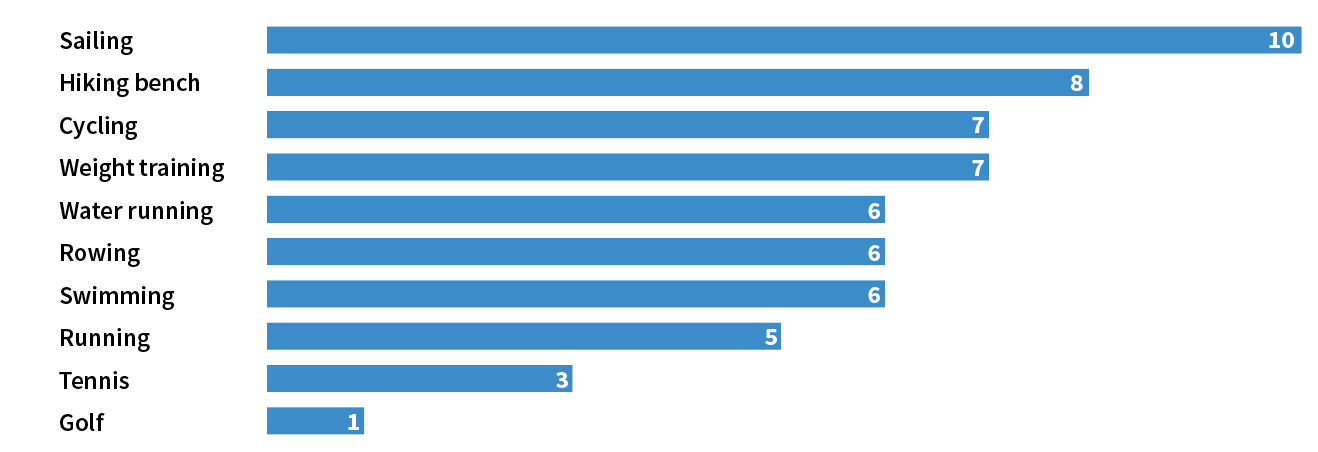
The value in sport-specific training: Ratings out of 10 for different sports and exercises to physically train for small boat sailing
Cycling, hiking benches, water running (waist-deep) and weight training all give the thighs a solid workout, and with consistent effort will help improve the endurance of the muscles used for hiking. Focus on these activities to hike longer and stronger during a race.
Across a week, aim for roughly 35 points worth of sailing-related activity, using the numbers in the graph. For example:
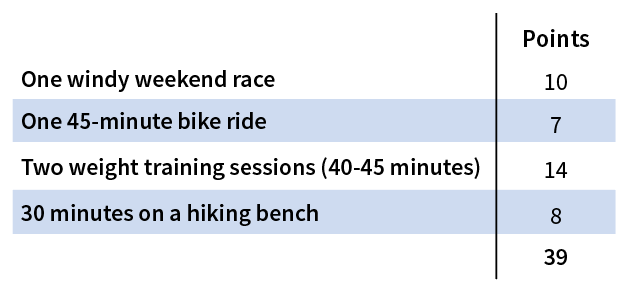
The more specific the activity, the more efficient your training will be. Full-time small boat sailors typically reach 70-100 points a week.
Occasionally including a lower-ranked activity isn’t a bad thing. Different types of exercise place new stresses and strains on the body, which can help prevent overuse injuries and add variety to your training week.
Swimming is also valuable because injuries are rare and it gives a whole-body workout. Its value for sailing can be increased by using flippers and doing kick-only laps. Use stiff, medium-length fins to exaggerate the work done by the thighs, hips, buttocks and ankles – the same muscles that matter when hiking.
Training (Variables & Principles)
Training variables are the levers you adjust in any programme – namely intensity, duration, frequency and volume.
- Intensity: Heart rate is a good, simple and accurate indicator of exercise intensity. Roughly, you will need to work in a heart rate range of 120-160 beats per minute to make gains in aerobic fitness. To increase your strength, say, to lift your boat, your muscles will need to do repeated short, hard efforts, with a suitable rest afterwards
- Duration: You need to work over a long enough period (30+ minutes) to improve your aerobic fitness and strength. Typically, an aerobic workout would be more continuous in activity than a session designed to improve power or strength. A really long session (2-4 hours) is OK if you are fit enough to handle it, but it may mean you will need more rest before the next session
- Frequency: Three training sessions per week is usually regarded as the minimum number to make steady gains in aerobic fitness or your muscle’s strength. However, top Olympic sailors usually do 8-12 different sessions per week
- Volume: When you multiply frequency by duration you get volume. It’s usually measured per week. Minimum volume would be about two hours per week. Maximum volume depends on your fitness, but let’s say that 20-25 hours a week is a lot!
Principles Of Training
Before getting into specific exercises, it helps to understand the basic rules that make training work. These simple principles apply to every successful fitness programme – whether you’re preparing for a world championship, weekend racing or just wanting to feel stronger and last longer on the water.
Every good training programme, for sailing or any other sport, is built on a few key principles. Understanding these helps you train smarter, improve faster and avoid injury.
- Overload and progression: To get fitter, you have to ask your body to do a bit more than it’s used to. That might mean a longer session, higher intensity or shorter rest. As your body adapts, you gradually increase the challenge to keep improving
- Specificity: You’ll get the biggest return from training that looks and feels like sailing. The closer your exercises match the movements, muscles and energy demands of your class, the more useful they’ll be on the water
- Recovery, rest and adaptation: Training makes you tired; recovery makes you stronger. Improvement happens when the body repairs and adapts after the workload, not during it. Build in time for rest, easy days and proper sleep – they’re all part of the programme
- Reversibility: Fitness doesn’t hang around forever. If you stop training, you’ll gradually lose the gains you’ve made – the old ‘use it or lose it’ rule still applies
- Individuality: No two sailors are the same. Age, body type, training history and even personality all affect how you respond to training. What works for your teammate might not be right for you
- Variation and periodisation: Doing the same thing every week eventually stops working. Mixing up the intensity, duration and focus keeps you improving and helps prevent injury or burnout
- Maintenance: Once you’ve built a solid base, you don’t need to keep pushing harder all the time. A smart, consistent programme can maintain your fitness with less effort between key regattas
Building sailing fitness isn’t about spending endless hours in the gym – it’s about training with purpose. Focus on quality over quantity, choose exercises that reflect the demands of your class and use the principles of training to guide how hard, how long and how often you work. The better you align your training with what actually happens on the water, the greater your progress will be once you’re back in the boat.
Next, we’ll look at how to train specifically for hiking – the most demanding and distinctive movement in small boat sailing, and the one that most often decides who goes fastest upwind.
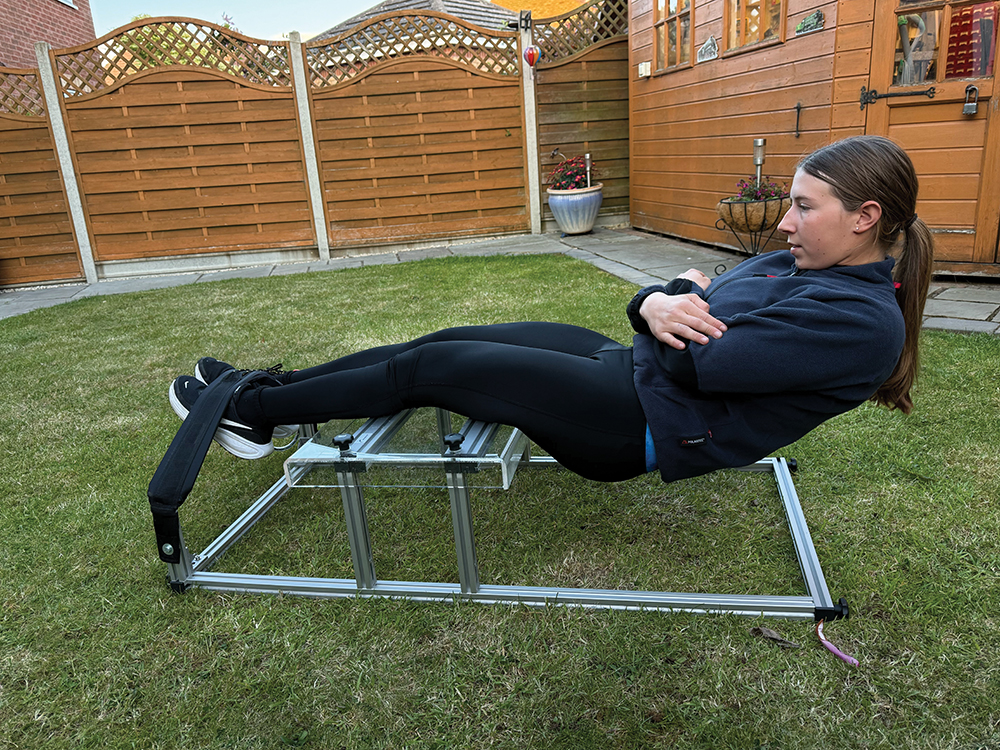
Focus on quality over quantity, focusing on the demand of your class